Breaking News

Maha Kumbh 2025: Over 6.2 Million Devotees Take Holy Dip at Sangam on Basant Panchami’s Final ‘Amrit Snan’
RRB ALP 2025: City Intimation Slip Released, Exam Dates Announced

  • Facebook
  • X
  • LinkedIn
  • Youtube
  • Instagram
  • Whatsapp
  • Login
  • Advertisie with Us
My India Times My India Times News

My India Times News

  • ℃
  •   
  • Login
My India Times Logo
Billingezy
  • Home
  • India
    • India
    • Andhra Pradesh
    • Arunachal Pradesh
    • Assam
    • Bihar
    • Chhattisgarh
    • Goa
    • Gujarat
    • Haryana
    • Himachal Pradesh
    • Jharkhand
    • Karnataka
    • Kerala
    • Madhya Pradesh
    • Maharashtra
    • Manipur
    • Meghalaya
    • Mizoram
    • Nagaland
    • Odisha
    • Punjab
    • Rajasthan
    • Sikkim
    • Tamil Nadu
    • Telangana
    • Tripura
    • Uttar Pradesh
    • Uttarakhand
    • West Bengal
    • Andaman and Nicobar Islands
    • Chandigarh
    • Dadra and Nagar Haveli and Daman and Diu
    • Delhi
    • Lakshadweep
    • Ladakh
    • Jammu and Kashmir
    • Puducherry
  • World
  • Crime
  • Interactive Maps
  • Business
  • Technology
  • Education
  • Health Care
  • Chemical
  • Top Stories
  • Entertainment
    • Entertainment
    • Bollywood
    • Web Series
    • Film-Review
    • South Movies
  • Agriculture
  • Religion
    • Religion
    • Festivals
    • Video
    • Astrology
    • Stories
  • Sports
    • Sports
    • Upcoming Match
    • Cricket
    • Hockey
    • Olympic
    • IPL
  • Election
  • Calculators
  • Travel
  • Awareness
  • Universe
    • Earth
    • Ocean
    • Space
  • Home
  • India
    • Uttar Pradesh
    • Delhi
    • Punjab
    • Rajasthan
    • Uttarakhand
    • Bihar
    • Jharkhand
    • Madhya Pradesh
    • Haryana
    • Himachal Pradesh
    • West Bengal
    • Telangana
    • Jammu & Kashmir
    • Andhra Pradesh
    • Arunachal Pradesh
    • Assam
    • Chhattisgarh
    • Goa
    • Gujarat
    • Karnataka
    • Kerala
    • Manipur
    • Meghalaya
    • Maharashtra
    • Nagaland
    • Odisha
    • Sikkim
    • Tamil Nadu
    • Andaman & Nicobar
    • Chandigarh
    • Ladakh
    • Lakshadweep
    • Puducherry
    • Dadra & Nagar Haveli and Daman & diu
    • Tripura
    • Mizoram
  • World
  • Crime
  • Crime Map
  • Business
  • Technology
    Playing GIF
  • Education
    Playing GIF
  • Health Care
  • Travel
  • Calculators
  • Awareness
  • Universe
    • Earth
    • Space
    • Ocean
  • More
    • Chemical
    • Entertainment
      • TV
      • Bollywood
      • Web Series
      • Flim Review Hot
      • South Movies
    • Agricluture
    • Top Stories
    • Religion
      • Festivals
      • Video
      • Astrology
      • Stories
    • Election
    • Sports
      • Upcoming Match Hot
      • Cricket
      • Hockey
      • Olympic
      • IPL
  •   ℃
  •   
Nagaland
2025-04-14

Nagaland Police Forms SIT After Sexual Harassment Allegations Against IAS Officer

In a major move, the Nagaland Police has set up a Special Investigation Team (SIT) to investigate allegations of sexual harassment against senior IAS officer Reny Wilfred. Some employees from the Investment and Development Authority of Nagaland (IDAN) have accused Wilfred, who’s the Joint Secretary there, of some serious stuff. This whole thing has blown up into a big deal, sparking discussions about who's really accountable in the administration and what’s going on behind the scenes politically in the state.

Allegations Surface Through Women’s Commission

The matter came to light after Ngineig Konyak, Chairperson of the Nagaland State Commission for Women (NSCW), wrote a letter to the Director General of Police (DGP) Rupin Sharma on March 17. Konyak mentioned that she had received a "verbal intimation" regarding allegations from Abu Metha, the Chairman of IDAN.

It is important to note that Abu Metha holds a significant position in Nagaland’s political scene. He serves as an Advisor to the Chief Minister and is also the Secretary-General of the ruling Nationalist Democratic Progressive Party (NDPP), which leads the government in alliance with the BJP.

Preliminary Inquiry Leads to FIR

Following the communication from the NSCW, the police launched a preliminary inquiry. The investigation revealed that a cognizable offence of sexual harassment had likely been committed. Acting swiftly, the police registered a formal FIR on April 2, initiating a full-fledged criminal investigation.

To ensure transparency and efficiency, a five-member Special Investigation Team, led by a senior IPS officer, was formed to handle the case independently.

Wilfred Claims Conspiracy to Target Him

Reacting strongly to the allegations, IAS officer Reny Wilfred stated that the charges were politically motivated. Speaking to the media in Kohima, he asserted that the established legal procedures had not been followed in dealing with the complaint.

“For cases like sexual harassment, there’s a proper process. Even if the Women’s Commission received a complaint, it should have first gone to the Internal Complaints Committee (ICC) within IDAN or the state Secretariat. The ICC should have evaluated the matter before involving the police. Here, the system has been deliberately bypassed just to frame a case against me,” Wilfred said.

He further added, “Feel free to arrest me if necessary. I am not leaving Nagaland. Just give me the opportunity to prove my innocence.”

Previous Controversy Surrounding Wilfred

This is not the first time that Reny Wilfred has faced serious allegations. During his tenure as the District Collector of Noklak, he was previously implicated in a case involving the alleged sexual assault of two minor girls. In that case, a Special Investigation Team had filed a chargesheet against him in 2021.

Wilfred challenged the charges and requested that the trial be shifted to another district, citing threats to his safety and concerns about receiving a fair trial. The case is still under judicial consideration in Tuensang district.

Political Dimensions Behind the Allegations

Observers believe that the timing and nature of the allegations could have a political angle. Given Wilfred's administrative position and his past confrontations with powerful political figures, it is speculated that the charges might be part of a larger political strategy to remove him.

However, women’s rights activists stress that every allegation of sexual harassment should be taken seriously, irrespective of political implications. They have welcomed the formation of the SIT, demanding a fair and unbiased investigation.

SIT Investigation Progress

The Special Investigation Team has begun its work, collecting witness statements and documentary evidence. The police have assured that the investigation will be handled professionally, ensuring that justice is neither delayed nor denied.

The SIT’s mandate includes verifying the authenticity of the allegations, evaluating the evidence submitted by the Nagaland State Commission for Women, and interacting with IDAN employees who reportedly made the complaints.

Authorities have promised that no political or administrative pressure will interfere with the investigation process.

Impact on Administrative Setup in Nagaland

The case has already sent shockwaves across the Nagaland bureaucracy. It has exposed potential lapses in internal grievance redressal mechanisms and highlighted the need for stronger protections for women in government workplaces.

If proven guilty, Wilfred could face strict disciplinary action, including suspension and criminal prosecution. On the other hand, if the allegations are found baseless, it could expose serious misuse of sensitive issues for political gains, leading to a credibility crisis for those involved.

Public Opinion Remains Divided

The public response in Nagaland has been mixed. Some citizens support Wilfred’s claims of a political vendetta, while others insist on a thorough probe to ensure accountability. Civil society groups have urged the government to handle the case sensitively, keeping the focus on facts rather than political narratives.

The situation is tense, and all eyes are now on the SIT. The outcome of this investigation will not only determine Wilfred’s future but could also have significant repercussions for Nagaland’s administrative and political landscape.
Nagaland
2025-03-06

Nagaland State Lottery Results for March 6, 2025 – DEAR Mahanadi Morning Draw: Complete Winners List and Prize Breakdown

The Nagaland State Lottery continues to be a beacon of hope for thousands of lottery enthusiasts across India, offering daily opportunities to turn dreams into reality. On March 6, 2025, the much-anticipated "DEAR Mahanadi Morning" Lucky Draw was held at 1 PM, with a grand first prize of ₹1 crore. With a vast number of participants vying for fortune, this lottery remains one of the most sought-after legal gambling options in India.


Overview of the Nagaland State Lottery

The Nagaland State Lottery is a government-regulated lottery system operating under strict laws to ensure fairness and transparency. Established to generate revenue for the state while offering legal and safe lottery options, this lottery has grown into one of the most reputable lotteries in India. With multiple draws held daily at 1 PM, 6 PM, and 8 PM, players have frequent chances to try their luck and win substantial cash prizes.

Among the many draws, the "DEAR Mahanadi Morning" lottery is one of the most awaited due to its lucrative prize structure. The affordability of tickets (priced at just ₹6) makes this lottery widely accessible to participants from various socio-economic backgrounds.


March 6, 2025 – DEAR Mahanadi Morning Draw Highlights

The "DEAR Mahanadi Morning" Lucky Draw on March 6, 2025, took place at the scheduled 1 PM slot, under the supervision of authorized officials to maintain the integrity of the process. The results were published on the official Nagaland State Lottery website and circulated across various media platforms to ensure transparency.

Participants eagerly awaited the announcement, hoping to see their ticket numbers among the winners. Below is the complete breakdown of the prize structure and winning categories.


Prize Structure and Winners List

The prize distribution for the DEAR Mahanadi Morning draw is as follows:

1st Prize: ₹1 Crore (1 winner)

2nd Prize: ₹9,000 (Multiple winners)

3rd Prize: ₹500 (Multiple winners)

4th Prize: ₹250 (Multiple winners)

5th Prize: ₹120 (Multiple winners)

Consolation Prize: ₹1,000 (For tickets matching all but one digit of the 1st prize-winning number)

For the complete list of winners, participants should refer to the official Nagaland State Lottery website.


How to Check Results

Participants can check the results in the following ways:

Official Website: The Nagaland State Lottery publishes results on its official website.

Newspapers & News Portals: Many leading newspapers and online portals publish daily lottery results.

Local Lottery Vendors: Ticket buyers can also check with their local lottery retailers.

Lottery Apps & Social Media Pages: Some third-party lottery result apps and social media pages provide updates on daily results.


How to Claim Your Prize

Winners must follow a systematic process to claim their winnings. Here are the key steps:

Verification: Double-check your ticket number with the official results published on the website.

Ticket Submission: If you have a winning ticket, it must be submitted within 30 days of the draw date.

Required Documents: Provide original ticket, valid government-issued ID proof, passport-size photographs, and a claim form.

Tax Deductions: As per government regulations, lottery winnings above ₹10,000 are subject to tax deductions before payout.

Prize Disbursement: Winners of smaller prizes can collect their winnings from authorized lottery retailers, while higher amounts require submission at the Directorate of Nagaland State Lotteries.


Responsible Gaming: Play Wisely

While the excitement of winning a lottery can be exhilarating, responsible gaming should always be a priority. The Nagaland State Lottery promotes responsible participation, urging players to view the lottery as a form of entertainment rather than a source of income.

Tips for Responsible Gaming:

Set a budget and stick to it.

Avoid chasing losses.

Play for entertainment, not for financial dependence.

Seek help if you feel gambling is becoming problematic.

For individuals facing issues related to compulsive gambling, various support programs and helplines are available.


Final Thoughts

The Nagaland State Lottery’s "DEAR Mahanadi Morning" draw on March 6, 2025, was yet another thrilling event, offering participants a chance to transform their lives overnight. With a first prize of ₹1 crore, many ticket holders eagerly awaited the results, hoping to see their dreams materialize. The lottery continues to maintain its reputation for transparency and credibility, making it a trusted gaming option for many.

As always, winners are encouraged to check the official results and claim their prizes within the designated timeframe. While the excitement of lottery participation is undeniable, responsible gaming should always be the guiding principle.

Nagaland
2025-03-06

Farmer-Scientist Interaction Program Empowers Poultry Farmers at CoVS&AH

Jalukie, March 5, 2025 – The College of Veterinary Sciences & Animal Husbandry (CoVS&AH), Jalukie, successfully hosted a one-day Farmer-Scientist Interaction and Technology Distribution Program, aimed at enhancing poultry farming through scientific advancements. The event featured Dr. Namsui Tho, Chief Veterinary Officer of Peren District, as the special guest.

Organized in collaboration with ICAR-CARI, Izzatnagar, the program was part of the project titled “Evaluation of CARI-Improved Germplasm and its Popularization” under the ICAR NEH Scheme. The initiative sought to provide farmers with technical expertise and improved poultry breeds to boost productivity and sustainability.

Distinguished experts shared their insights during the program. Dr. Mahak Singh, Senior Scientist at ICAR Medziphema, underscored the significance of backyard poultry farming in uplifting rural livelihoods and strengthening the local economy. Additionally, Dr. Gunjan Das, Professor and Head of Veterinary Medicine, addressed critical concerns related to emerging and re-emerging poultry diseases, equipping farmers with essential disease management strategies.

The program was presided over by Dr. I. Shakuntala, Dean of CoVS&AH, who encouraged participants to take full advantage of the initiative for long-term success in poultry farming. The event was efficiently coordinated by Dr. Bhabesh Mili, Assistant Professor of Veterinary Physiology, and Dr. Imtiwati, Assistant Professor of Livestock Production Management.

A key highlight of the program was the distribution of advanced agricultural technology and essential resources to 60 selected beneficiaries. Each participant received two-week-old vaccinated chicks of the CARI-Devendra and CARI-Nirbheek breeds, along with feed, feeders, and drinkers, providing them with a solid foundation to improve their poultry ventures.

With its emphasis on scientific knowledge, improved breeds, and resource support, the program marked a significant step toward strengthening poultry farming in the region. The collaborative effort between scientists and farmers demonstrated the potential of integrating research-driven solutions into practical farming applications, fostering long-term agricultural growth.

Nagaland
2025-03-06

Nagaland Super League Thriller: Sechu Zubza Hold Table-Toppers Barak FC to a Gritty Draw

Chümoukedima, Nagaland — In an electrifying encounter at the Chümoukedima Football Stadium, Sechu Zubza FC put up a valiant fight to hold the high-flying Barak FC (BFC) to a goalless draw in Match 28 of the Nagaland Super League (NSL) on Wednesday. The result marked a significant display of resilience from Sechu Zubza, who managed to break Barak FC’s dominant winning streak, denying them full points for the first time this season.

A Battle of Tactics and Determination

From the very first whistle, Sechu Zubza showcased their intent, launching an aggressive offensive against the table-toppers. They immediately tested the defensive capabilities of BFC with relentless attacks, pressing high up the pitch and creating dangerous opportunities inside their opponent’s penalty box.

The first major chance of the match came in the 10th minute when a Sechu Zubza forward found himself in a one-on-one situation with the Barak FC goalkeeper. However, despite a golden opportunity to take the lead, his shot lacked precision, allowing the keeper to make a crucial save.

Barak FC Responds with Near Misses

Despite facing intense pressure, BFC gradually settled into the game, seeking counter-attacking opportunities. In the 20th minute, midfielder Toka found the back of the net after a well-orchestrated play, only to be ruled offside. The decision was met with protests from BFC players, but the referee remained firm on his call.

The first half continued to be an evenly contested affair, with Barak FC attempting to build momentum. A dangerous cross into the opponent’s box nearly resulted in a goal for the league leaders, but their forward failed to connect properly, squandering another promising chance.

Sechu Zubza’s Defensive Resilience

The second half began with both teams pushing for the elusive opening goal. Sechu Zubza’s defense, however, stood firm, absorbing pressure while launching quick counterattacks. Their commitment to tight marking and structured defensive play frustrated Barak FC’s attacking line, limiting their effectiveness in front of goal.

In one of the most dramatic moments of the match, a miscalculated clearance from a BFC defender nearly turned disastrous. Attempting to clear a free-kick cross, the defender inadvertently sent the ball toward his own goal. The BFC goalkeeper, fully stretched, managed to get his fingertips on the ball, pushing it onto the crossbar before his teammates cleared it away from danger.

Minutes later, another defensive mishap almost handed Sechu Zubza the lead. A rushed clearance saw the ball sailing just over the bar, resulting in a corner kick for Sechu Zubza. The ensuing set piece was met with a powerful header, but the ball agonizingly brushed the outer edge of the crossbar before going out for a goal kick.

Final Minutes Drama and Near Misses

As the clock ticked down, both teams searched desperately for the winner. Barak FC, determined to maintain their unbeaten record, pushed forward aggressively. In added time, Toka had two clear-cut chances to seal the game for BFC. First, his header from a brilliant cross went just wide of the post, leaving fans gasping. Moments later, his well-struck shot seemed destined for the net, only to be denied by an outstanding reflex save from the Sechu Zubza goalkeeper.

The final whistle blew with neither side able to break the deadlock, concluding an exhilarating contest that was a testament to the competitive spirit of the Nagaland Super League.

What This Means for the NSL Standings

While Barak FC continues to lead the league, this draw serves as a reminder that they are not invincible. Sechu Zubza’s remarkable performance highlighted their tactical discipline and determination, proving they can stand toe-to-toe with the best teams in the competition.

As the league progresses, both teams will look to build on this result. Barak FC will aim to get back to their winning ways, while Sechu Zubza will hope to carry this momentum forward in their upcoming fixtures.

With several crucial matches still to come, the NSL promises to deliver more intense battles, dramatic moments, and unexpected results. Football fans across Nagaland will be eagerly anticipating the next round of action in what has been an exhilarating season so far.


Nagaland
2025-03-06

Nagaland: A Land of Rich Heritage and Valor

Nestled in the northeastern part of India, Nagaland is a land of captivating landscapes, rich cultural heritage, and a profound history of resilience and valor. Known for its diverse indigenous tribes and traditions, the history of Nagaland is shaped by centuries of migration, resistance, and socio-political transformations. This article delves into the fascinating journey of Nagaland from its ancient origins to its modern statehood.

Ancient Origins and Early Inhabitants

The history of Nagaland dates back to prehistoric times when various indigenous tribes settled in the region. The Nagas, a collective term for several tribal communities, are believed to have migrated from Southeast Asia thousands of years ago. The exact origins of the Nagas remain a subject of debate, but linguistic and anthropological evidence suggests links to the Tibeto-Burman ethnic groups.

The Naga tribes lived in self-sufficient villages, each functioning as an independent entity with its own governance system. The traditional tribal structure was democratic in nature, with village councils playing a pivotal role in decision-making. Warfare and headhunting were integral parts of Naga society, serving as symbols of valor and prestige.

Medieval and Colonial Encounters

During the medieval period, the Naga tribes remained largely isolated from external influences. Unlike the plains of Assam and Bengal, which came under the rule of various dynasties, the hilly terrain of Nagaland allowed the Nagas to maintain their autonomy.

The advent of the British in the 19th century marked a significant turning point in Naga history. The British first encountered the Nagas in the early 19th century during their expansion in Assam. The frequent clashes between British forces and Naga warriors led to the imposition of British control in the region. In 1879, after a fierce battle, the British established their administrative headquarters in Kohima, making it the center of colonial rule.

Despite British efforts, complete control over the Naga tribes remained elusive. The Nagas resisted foreign rule through frequent uprisings and continued to maintain their traditional way of life. The colonial period also saw the arrival of Christian missionaries, who played a crucial role in shaping the socio-religious landscape of Nagaland. By the early 20th century, a significant portion of the Naga population had converted to Christianity, leading to a decline in traditional animistic practices.

World War II and the Battle of Kohima

One of the most defining moments in the history of Nagaland occurred during World War II. The Battle of Kohima (April–June 1944) was a critical confrontation between the British Indian Army and the Japanese forces. The battle, often referred to as the "Stalingrad of the East," was fought on the ridges of Kohima and played a decisive role in halting the Japanese advance into India.

The battle witnessed fierce combat, with local Nagas playing a crucial role in supporting the Allied forces. Their assistance in intelligence gathering and logistical support proved instrumental in securing victory for the British. The war left a lasting impact on Nagaland, exposing the region to global events and influencing its political consciousness.

The Naga Nationalist Movement

The post-war period saw the rise of Naga nationalism, driven by the demand for self-determination and political autonomy. The Naga National Council (NNC), formed in 1946 under the leadership of A.Z. Phizo, spearheaded the movement for an independent Naga nation. The NNC declared Naga independence on August 14, 1947, a day before India gained independence from British rule.

However, the Indian government did not recognize this declaration, leading to decades of conflict. The armed struggle between Naga insurgents and Indian security forces escalated in the 1950s. The Indian government responded with military operations and imposed the Armed Forces (Special Powers) Act (AFSPA) in the region, further intensifying hostilities.

Nagaland’s Statehood and Political Evolution

In an attempt to address Naga aspirations, the Indian government initiated negotiations, leading to the formation of the state of Nagaland on December 1, 1963. This made Nagaland the 16th state of India, with Kohima as its capital. Despite statehood, the demand for complete sovereignty persisted, resulting in continued insurgency and peace talks.

Over the years, various accords and agreements were signed to bring lasting peace to the region. The Shillong Accord of 1975 saw some NNC factions agree to renounce armed struggle, but a breakaway faction led to the formation of the National Socialist Council of Nagaland (NSCN) in 1980. This further fragmented into NSCN-IM (Isak-Muivah) and NSCN-K (Khaplang), both of which played a central role in later peace negotiations.

The Peace Process and Contemporary Nagaland

The late 20th and early 21st centuries saw significant developments in the Naga peace process. The Indian government engaged in negotiations with Naga insurgent groups, particularly the NSCN-IM. The signing of the Framework Agreement in 2015 between the Indian government and NSCN-IM was a major step toward resolving the conflict, though a final settlement is yet to be reached.

Today, Nagaland is a vibrant state with a unique cultural identity. The Hornbill Festival, celebrated annually, showcases the diverse traditions, dances, and crafts of the Naga tribes. The state has also made strides in education, infrastructure, and tourism, emerging as a key player in Northeast India's development.

Conclusion

The history of Nagaland is a saga of resilience, struggle, and transformation. From ancient tribal societies to colonial encounters, from the battlegrounds of World War II to the corridors of modern diplomacy, Nagaland has traversed a remarkable journey. While challenges remain, the spirit of the Naga people continues to drive the state toward a future of peace and prosperity. As Nagaland embraces modernization, it remains deeply rooted in its rich heritage, making it one of the most fascinating regions of India.


Nagaland
2025-03-06

Ghost Towns and the Battle for Land Rights in Nagaland’s Development Era

In Nagaland, the mere announcement of a two-lane road project triggers a familiar spectacle: landowners, driven by desperation and foresight, hurriedly erect makeshift structures on their otherwise barren lands. Almost overnight, these ghost towns of uninhabited huts emerge—not as a ploy, but as a testament to the ongoing struggle for rightful compensation. Yet, instead of questioning the systemic injustices that lead to such desperate measures, fingers are readily pointed at the villagers, branding them as opportunists engaging in "cheap tricks." The reality, however, is far more complex and deeply entrenched in historical inequities.

The real question is not why villagers scramble to claim whatever compensation they can, but rather, why are they forced into this position in the first place? The landowners in Nagaland, often unaware of their legal rights, are routinely denied fair compensation by those in power—despite clear mandates under the Right to Fair Compensation and Transparency in Land Acquisition, Rehabilitation and Resettlement Act, 2013 (hereinafter referred to as the Act of 2013). This legislation was designed to ensure equitable land acquisition, but its benefits remain largely unrealized in the state. Government authorities and influential figures continue to exploit loopholes, manipulating landowners into either surrendering their ancestral lands for free or settling for meager damage compensation instead of rightful land compensation.

The Evolving Land Rights Crisis in Nagaland

Historically, Nagaland—along with other northeastern states—has suffered from governmental neglect in terms of infrastructure and development. However, recent efforts have spurred a surge in public projects, including roads, dams, and institutions, aimed at integrating the region into India’s broader development agenda. While these initiatives promise progress, they also bring forth pressing concerns about displacement, inadequate compensation, and the erosion of indigenous land rights.

Unlike in other states, land in Nagaland holds profound cultural and emotional significance. The intricate bond between the people and their land is protected under Article 371A of the Indian Constitution, which grants Nagaland special privileges over land and resources. Yet, despite this safeguard, the rights of landowners are continuously trampled upon. Astonishingly, some influential figures are advocating for the dilution of Article 371A, failing to recognize the dire consequences such an action would have on indigenous communities. Removing these protections could pave the way for unchecked land grabs, further marginalizing local populations and rendering them vulnerable to external encroachment.

Systemic Exploitation and the Role of Authorities

Land acquisition in Nagaland predominantly follows an informal process, involving Village Councils and Civil Society Organizations. Landowners, acting in good faith, frequently issue No-Objection Certificates (NOCs) for developmental projects—either donating land outright or settling for damage compensation alone. However, this process is often marred by coercion. Those in positions of power subtly—or overtly—threaten to withdraw projects unless landowners comply with these terms, effectively forcing them into an unfair agreement. These agreements, often executed behind closed doors without due legal process, result in long-standing grievances, many of which have now reached the High Court.

The Act of 2013 clearly distinguishes between land compensation and damages incurred during acquisition. Yet, authorities blur these lines, misleading landowners into accepting inadequate settlements. Poor villagers, lacking both legal knowledge and financial resources, are left with little recourse. Their struggles are drowned out by bureaucratic red tape, while powerful elites continue to benefit from a deeply flawed system.

The Consequences of Ignoring Land Rights

Development should never come at the expense of the rights and well-being of indigenous communities. The forced relinquishment of ancestral lands without adequate compensation and rehabilitation is not only unlawful but also detrimental to social stability. The dismal quality of completed projects—marked by substandard roads and crumbling infrastructure—further aggravates public frustration. If the goal is genuine progress, then transparency, fairness, and adherence to legal frameworks must be prioritized.

Nagaland must take cues from global indigenous land rights movements. Across the world, indigenous communities—from the Adivasis in Jharkhand to the Lakota Sioux in North America and the Maori in New Zealand—are engaged in ongoing battles to reclaim ancestral lands. Legal battles, protests, and community mobilization remain their tools of resistance. The people of Nagaland must similarly assert their rights, ensuring that development does not equate to displacement and dispossession.

The Road Ahead

The preservation of Article 371A and the proper implementation of the Act of 2013 are crucial in safeguarding the rights of landowners in Nagaland. Rather than blaming villagers for seeking compensation, the focus must shift to addressing corruption, ensuring equitable resource distribution, and holding authorities accountable for their failures.

For development to be truly meaningful, it must be inclusive and just. A future where the people of Nagaland are equal stakeholders in their own progress is not only possible but essential. The battle for land rights is not just about compensation—it is about dignity, identity, and survival.


Nagaland
2025-03-06

Nagaland Legislative Assembly's 6th Session Highlights Government's Achievements and Future Plans

The 6th Session of the 14th Nagaland Legislative Assembly commenced on 3rd March 2025 with an address by Governor La. Ganesan at the Assembly Hall in Kohima. In his speech, the Governor outlined the government’s accomplishments and upcoming initiatives, emphasizing its commitment to the people and its efforts to resolve the Naga Political Issue.

Efforts Towards Naga Political Issue Resolution

The Governor highlighted that the government has actively engaged in consultations with tribal bodies and civil society organizations. A significant meeting was held on 12th September 2024 to deliberate on the issue, followed by a meeting with the Union Home Minister on 21st November 2024. Additionally, the government submitted its comments on the third draft of the Memorandum of Settlement for the Frontier Nagaland Territorial Authority on 6th November 2024. Substantial progress has been made, and the government remains hopeful for a resolution addressing all concerns.

Agriculture and Rural Development Initiatives

Agriculture remains the backbone of Nagaland’s economy, with about 70% of the population engaged in agricultural and allied activities. Under the Digital Agriculture Mission, various initiatives promoting smart farming have been launched, including a web-based Geo-Portal and mobile applications. Under PM-KISAN, 2,21,931 farmers have benefitted, receiving ₹620 crore directly in their bank accounts as of 31st January 2025.

The state has also promoted organic farming through the Mission Organic Value Chain Development for North East Region (MOVCDNER), covering 30,500 hectares and benefiting 31,104 farmers. Marketing partnerships have been established with companies outside Nagaland to expand the reach of organic produce.

In livestock development, the National Livestock Mission (NLM) has led to the establishment of 26 pig breeding farms in 2024-25, producing 35,200 piglets and 88 tonnes of meat. To improve veterinary care, three hospitals are under construction in Chumoukedima, Niuland, and Shamator with an investment of ₹250 lakh.

The cooperative sector has also made progress. Through the Fast Track Loan Recovery Drive, ₹343.25 lakh has been recovered in the last four years. Additionally, 8,020 cooperative societies have been registered in the National Cooperative Database.

Horticulture and Soil Conservation

The Department of Horticulture has identified 16 model villages, covering 340 hectares under the Mission for Integrated Development of Horticulture (MIDH). The state is also promoting cash crops through events like the Cucumber Festival, Organic King Chilli Festival, and Thanamir Apple Festival. The 25th Hornbill Festival witnessed the promotion of horticulture tourism in select villages.

The Department of Soil & Water Conservation distributed micronutrients to 74,000 farmers covering an equal amount of land. Under the Rashtriya Krishi Vikas Yojana (RKVY), 6,000 hectares of acidic soil will be treated with agricultural lime, and 1.11 lakh soil health cards will be distributed.

Infrastructure Development and Rural Employment

The government generated 65.94 lakh person-days of employment through MGNREGA by 11th February 2025. Under PMAY-G, 8,191 houses were constructed in 2024-25, with a total of 20,569 houses built against a target of 48,830.

Under the Jal Jeevan Mission (JJM), 3,37,174 Functional Household Tap Connections (FHTC) have been provided. The state has achieved 100% Open Defecation Free (ODF) status, with continued efforts to upgrade villages to Model ODF Plus status.

Under the Pradhan Mantri Krishi Sinchayee Yojana (PMKSY), 270 Surface Minor Irrigation Schemes worth ₹206 crore are expected to be completed by March 2025. An additional 262 Groundwater Irrigation Schemes worth ₹18 crore have been completed in five districts.

Power, Industry, and Road Infrastructure

The Power Department has secured ₹667 crore under the Revamped Distribution Sector Scheme (RDSS) to improve power reliability. The Green Village Initiative provided free LED lights to 23 villages. A 2.4 MW hydro project has been completed in Peren district, while new solar power plants of 5 MW each are underway at Niuland and Zhadima.

The Public Works Department (PWD) launched the Online Management and Information System (OMIS) to streamline infrastructure management. The department completed 108.50 km of roads under PMGSY and 46.34 km under NESIDS, along with several bridge projects.

Urban Local Body elections were successfully conducted for the first time in 20 years in three municipalities and 22 town councils, with 37% of elected seats won by women.

Health and Education Reforms

The School Education Department introduced the Smart Attendance Management and Informative Leaves (SMILE) system and is developing Lighthouse School Complexes in each district. Under Samagra Shiksha, 33 new school buildings and residential quarters have been constructed, while five middle schools and one primary school have been upgraded.

The Health Department empanelled 66 hospitals in and outside Nagaland under the CMHIS, processing 17,501 claims. Under Ayushman Bharat PM-JAY, 77 hospitals have been empanelled, with over 30,000 claims approved.

Under the Pradhan Mantri TB Mukt Abhiyan, food and vitamin supplements are being provided to over 1,000 TB patients by 387 donors. The National Ayush Mission has supported training programs and established herbal gardens in six districts.

The Labour Department has registered 2,32,758 unorganized workers under the e-SHRAM portal for future social security benefits. The Tribal Affairs Department has three functional Eklavya Model Residential Schools with 744 students enrolled and is constructing 11 more schools.

Tourism, Employment, and Cultural Development

The 25th Hornbill Festival attracted over 2 lakh attendees, including 2,527 international tourists. This has positively impacted the economy and employment.

The Women Resources Development Department has initiated the Protection and Promotion of Tribal Designs Project, training artisans in traditional weaving. The Myki Village Adoption Initiative has been launched in Khonoma Village to support rural development.

The Social Welfare Department provided assistance to 7,563 beneficiaries under the Pradhan Mantri Matru Vandana Yojana (PMMVY) and supports 699 children under Mission Vatsalya. The National Social Assistance Programme aids 63,678 beneficiaries.

Under the Minority Affairs Department, projects such as a Multi-Disciplinary Sports Complex in Chumoukedima and Women Entrepreneurship Facilitation Centers are being implemented.

The government’s comprehensive initiatives across agriculture, infrastructure, education, and social welfare reflect a strong commitment to holistic development and progress in Nagaland. The administration continues to focus on sustainable economic growth while ensuring the well-being of its citizens.

Nagaland
2025-03-06

Congress Vows to Unseat NDPP in 2028 Nagaland Elections: AICC Secretary Ulaka

Kohima, March 6: The Congress party has set its sights on a political transformation in Nagaland, reaffirming its commitment to ending the rule of the Nationalist Democratic Progressive Party (NDPP) in the 2028 assembly elections. AICC Secretary and state in-charge Saptagiri Sankar Ulaka made this clear during a press conference on Wednesday, where he outlined the party’s roadmap for strengthening its presence in the state.

Ulaka emphasized the need for a new political direction in Nagaland, citing concerns over corruption, unemployment, and governance failures under the NDPP-BJP coalition. He revealed that Congress leaders are actively strategizing with the Nagaland Pradesh Congress Committee (NPCC) to expand the party’s grassroots network, conduct district-level tours, and identify strong candidates well ahead of the elections.

The Congress leader highlighted the party’s resurgence in the state following its significant victory in the 2024 Lok Sabha elections. The win, where Congress candidate S Supongmeren Jamir defeated NDPP’s Chumben Murry by a decisive margin of 50,984 votes, marked a political shift in Nagaland after two decades. According to Ulaka, this victory is a testament to the growing public trust in Congress’s leadership and vision for the state.

Criticism of NDPP-BJP Government

Launching a scathing attack on the ruling NDPP-BJP alliance, Ulaka accused the government of corruption and mismanagement, which he claimed had stalled the state’s development. He alleged that a "20 percent commission" culture has taken root, affecting public services and governance. Additionally, he raised concerns about rising unemployment, inadequate educational infrastructure, and skyrocketing prices of essential commodities, all of which, he argued, reflect the failure of the current administration.

Ulaka also praised the governance of former Chief Minister SC Jamir, asserting that Nagaland deserves a leadership that prioritizes transparency, accountability, and development. Confident in the Congress party’s vision, he expressed optimism that both Nagaland and the Centre would witness a regime change in the upcoming 2028 and 2029 elections.

Congress’s Plan for the Future

To ensure a strong political comeback, the Congress has outlined a three-month plan focused on organizational restructuring. This includes forming key committees, mobilizing grassroots support, and engaging with local communities to understand their needs and concerns.

NPCC President and newly elected Lok Sabha MP S Supongmeren Jamir also backed Ulaka’s leadership, stating that his experience would be instrumental in shaping the future of Congress in Nagaland. He reaffirmed the party’s pledge to provide a corruption-free government that prioritizes people’s welfare and long-term development.

With a renewed sense of purpose and growing public support, the Congress is gearing up for an intense political battle, aiming to bring a fresh wave of leadership to Nagaland in 2028.

Nagaland
2024-11-09

Mewi HSS Celebrates Cultural Heritage and Christia

Kohima, November 8, 2024 – Mewi Higher Secondary School hosted its vibrant Annual Cultural Day, a celebration of the rich cultural heritage of Nagaland and the values that shape its future. The event was graced by Kudecho Khamo, Advisor of the CAWD and Taxes, who was the special guest for the day.

Under the theme, "Embracing and Inculcating Cultural Identity Among Young Minds," the event emphasized the importance of nurturing a strong cultural identity while encouraging the youth to stay rooted in Christian values. Khamo, in his address, urged the younger generation to hold their cultural and Christian identity at the core of their lives, stressing that these values should guide their decisions and actions.

"Your Christian identity is the foundation of everything you do," Khamo said, sharing his own journey from humble beginnings to achieving success. He highlighted the importance of resilience, hard work, and dedication, rather than where one starts, as the key to achieving success. The advisor also lauded Nagaland's growing entrepreneurs for their pivotal role in the state's development. From creating job opportunities to improving infrastructure, Khamo emphasized that entrepreneurship is crucial for the future of Nagaland’s economy.

However, Khamo did not overlook the aspirations of students seeking government careers, urging them to excel academically and prepare early for the competitive world of public service. He also encouraged the students to focus on developing virtues such as honesty, diligence, and prayer—values that transcend academic achievements and will contribute to their long-term success.

The event also featured speeches from key figures, including Vekhosa Kotso, the DIG, who spoke about the role of youth in shaping the future of Nagaland. Principal Khrieketounuo Chale delivered the welcome address, and Vilhoubeilie Solo, the Administrator, invoked blessings for the occasion.

The cultural program was the highlight of the day, showcasing the talents of the students in various forms of traditional art. Folk dances, vibrant songs, skits, and a dazzling display of traditional attire took center stage, drawing attention to the deep cultural roots that define the Naga people.

Inspiring Young Minds for a Bright Future

The event at Mewi HSS was not just a celebration of culture, but a call to action for the youth to pursue their dreams with ambition, guided by strong values. It reminded the students that their potential is not determined by their starting point, but by the resilience they exhibit in the face of challenges.

As Nagaland looks towards the future, events like this are pivotal in ensuring that its cultural heritage and Christian values continue to thrive, inspiring the next generation of leaders and changemakers.

/ Home / nagaland

Nagaland

  • Nagaland CM Rio Launches Chingwang Konyak’s Auto
    My India Times      2024-11-09  146

    Nagaland CM Rio Launches Chingwang Konyak’s Auto

    Nagaland's Chief Minister Neiphiu Rio launched the much-anticipated autobiography of Chingwang Konyak, the prominent leader and president of the Nationalist Democratic Progressive Party (NDPP). The book, "My Life Story", was unveiled at Niathu Resort in Chümoukedima on Friday, November 8, 2024. The launch event was a testament to Konyak’s political career, which has spanned several decades and left an indelible mark on the state’s history.

    During the event, CM Rio reflected on his enduring partnership with Konyak, celebrating not only their political collaboration but also Konyak's personal qualities as a leader. Rio shared how, despite Konyak's initial plans to retire from active politics, his deep sense of duty to the people of Nagaland drew him back into the political fray. The CM described Konyak as a "down-to-earth and approachable" leader, admired for his ability to engage with people at every level, from grassroots citizens to high-ranking officials.

    Konyak, now 81, has played a pivotal role in shaping Nagaland’s political landscape, especially with the establishment of the NDPP. His leadership has been integral in the party’s rise to prominence, managing a fine balance between victories and setbacks. Rio commended Konyak for his ability to remain composed even in the face of political challenges, an approach that has made him a revered figure across the state.

    In his speech, Konyak reflected on the unexpected journey that led to the creation of his autobiography. Originally planning to retire and write the book in 2014, Konyak was pulled back into the complexities of politics, which delayed the project. However, his life story, rich with political insights and experiences, is now available for the public, and Konyak hopes it will serve as both a personal reflection and a guide for future leaders.

    The book chronicles Konyak’s long and storied career, offering an inside look at the political intricacies and challenges faced by Nagaland over the years. It highlights the evolution of his thoughts on leadership, governance, and the Naga issue, which has been central to his political ideology. Konyak expressed his hope that readers, particularly younger generations, would gain valuable insights from his experiences, and find inspiration in his unwavering commitment to serving his people.

    A Reflection of Konyak's Leadership and Vision

    Konyak’s autobiography is more than just a recount of his life; it is a reflection of his contributions to Nagaland’s political growth and a call to action for future leaders. As the NDPP’s president, he played a key role in shaping the party’s policies and establishing it as a formidable force in Nagaland's political arena. Konyak’s leadership is characterized by his commitment to the development of the Eastern Naga region, a priority he has championed throughout his career.

    CM Rio expressed his gratitude for Konyak’s leadership and stated that his wisdom, patience, and composure have been invaluable in navigating the challenges of governance. As the NDPP continues to lead Nagaland, Rio emphasized the importance of Konyak's guidance, both for the party and the state at large.

    The event also saw tributes from several political figures and dignitaries, with many praising Konyak's enduring contributions to the state's development. The book, "My Life Story", is now available for purchase at leading bookstores and through Heritage Publishers.

    An Inspiration to Future Generations

    Konyak’s autobiography is not just for those with an interest in politics, but for anyone who seeks to understand the challenges of leadership, the complexities of governance, and the personal sacrifices made in the pursuit of public service. By sharing his journey, Konyak hopes to inspire others to follow in his footsteps, serving their people with integrity, compassion, and dedication.

    This release marks the end of one chapter in Konyak's life and the beginning of a new legacy that will continue to resonate in the hearts of Nagaland's people for generations to come.

    …
  • Dynamo FC and Head Hunters FC Triumph in Kengurüs
    My India Times    2024-11-09  154

    Dynamo FC and Head Hunters FC Triumph in Kengurüs

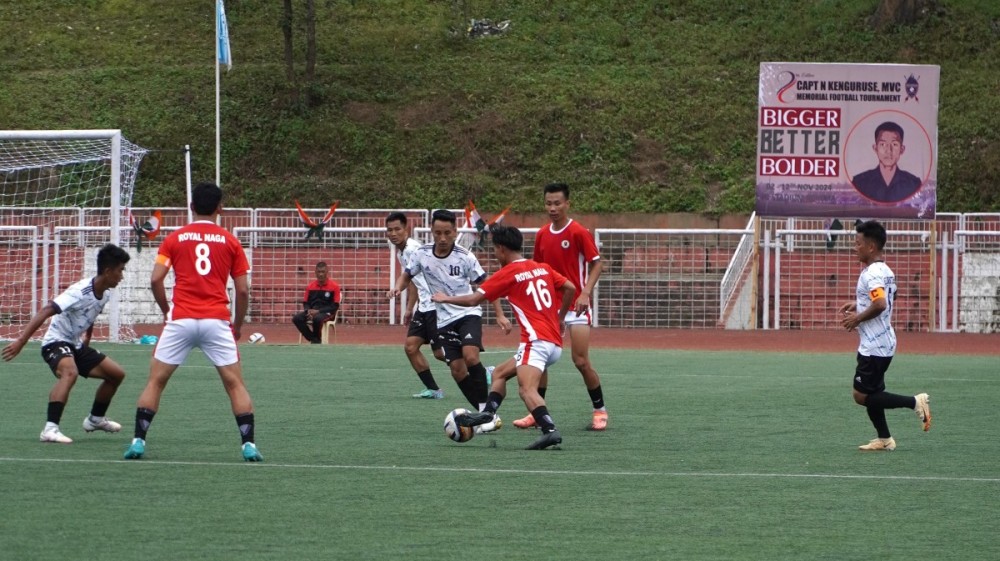
    The ongoing Capt N Kengurüse Football Tournament at IG Stadium saw exhilarating action on Friday, with Dynamo FC and Head Hunters FC securing impressive victories to advance to the semifinals. Both teams displayed remarkable resilience and skill, leaving fans on the edge of their seats.

    Dynamo FC Shines in Thrilling Penalty Shootout:
    In the first match of the day, Dynamo FC faced off against Lengreng FC in a tense battle that ended in a goalless draw after regular time. The match was a defensive masterpiece, with both teams struggling to break down the other's defense. The game went into a penalty shootout, where Dynamo FC prevailed 5-4, sealing their place in the semifinals.

    Dynamo FC's victory came down to nerves of steel in the penalty shootout, with both teams delivering solid performances. However, Dynamo FC held their composure, clinching the win to face off against Mez & Co FC in a much-anticipated semifinal match on November 11.

    Head Hunters FC Dominates with a 4-1 Victory:
    In the second match, Head Hunters FC showed impressive attacking strength, overcoming Western Sumi SA 4-1. Despite a strong early start by Western Sumi, who took the lead in the 5th minute with a goal from Thulunso, Head Hunters responded with two quick goals by Visieto in the 10th and 13th minutes. The momentum was firmly in Head Hunters' favor.

    Head Hunters further asserted their dominance with goals from Thanglenhao in the 56th minute and Winamthiu in the 67th minute, ensuring a comprehensive 4-1 victory. The result secured their spot in the semifinals, where they will aim for a spot in the final.

    The Road Ahead:
    With the victories, both Dynamo FC and Head Hunters FC will now turn their attention to the semifinals. Dynamo will meet Mez & Co FC, while Head Hunters will face the winner of the other quarterfinal. Both matches are set to bring intense competition as teams vie for the prestigious title in the ongoing tournament.

    Conclusion:
    The Kengurüse Football Tournament continues to showcase thrilling matches and high-level football. As Dynamo FC and Head Hunters FC march on to the semifinals, the excitement only grows for fans eagerly awaiting the next chapter of this electrifying tournament.

    …
  • Nagaland Dear Sandpiper Lottery Result 07-11-2024:
    My India Times    2024-11-09  110

    Nagaland Dear Sandpiper Lottery Result 07-11-2024:

    On the evening of November 7, 2024, the much-anticipated Nagaland Dear Sandpiper Lottery result was officially announced, marking a thrilling moment for all participants. The lucky winner of the first prize, a bumper prize of 1 crore rupees, has become the talk of the state, while other fortunate players secured impressive cash rewards as well.

    The Lottery Draw:
    Held live at 8 PM, the Dear Sandpiper Lottery results revealed a series of winning numbers, with the grand prize winner taking home the grand sum of 1 crore rupees. The draw was conducted with full transparency, as is customary with all state-run lotteries in Nagaland.

    In addition to the evening’s main prize, several other lucky players won significant amounts in the second, third, and subsequent prize categories. All the results are now available, and the lucky winners can claim their prizes from the designated lottery offices.

    Nagaland State’s Thriving Lottery Culture:
    The lottery system in Nagaland is part of a broader tradition of legal lotteries across 13 states in India, including West Bengal, Kerala, Punjab, and Assam. These lotteries not only provide substantial cash rewards but also contribute significantly to state funds, which are used for various development programs.

    Nagaland’s daily lottery draws include the Dear Mahanadi Morning at 1 PM, Dear Dancer Evening at 6 PM, and Dear Sandpiper Night at 8 PM. All three lotteries feature bumper prizes, making them highly popular among the state's residents and beyond.

    Winners' Reactions and Hopes for the Future:
    While the first prize is undoubtedly the highlight, many smaller winners also celebrated their fortunes. Several participants shared their excitement about the potential life-changing impact of their winnings. From paying off debts to investing in new ventures, the possibilities are endless for the fortunate recipients.

    The Bigger Picture:
    In addition to the excitement of winning, the state’s lottery system plays a pivotal role in creating jobs and boosting local economies. By supporting legal and regulated gambling, Nagaland ensures that its citizens can benefit from a structured and transparent system, which contrasts with the illicit gambling activities that often plague other regions.

    Conclusion:
    As the results of the Nagaland Dear Sandpiper Lottery 07-11-2024 are unveiled, the state’s lottery continues to shine as a beacon of hope for many. Whether you’re a seasoned player or new to the lottery world, the excitement surrounding each draw is undeniable. Stay tuned for future draws, as Nagaland’s lucky winners continue to make headlines.

    …
  • Nagaland’s Growth at a Crossroads: CM Rio Advoca
    My India Times   2024-11-09  117

    Nagaland’s Growth at a Crossroads: CM Rio Advoca

    Nagaland, known for its unique socio-political landscape, is at a critical juncture in its development journey. Chief Minister Neiphiu Rio has urged the 16th Finance Commission to allocate Rs 40,000 crore to address the state's pressing infrastructure needs and bridge its capital deficit. This appeal comes after decades of economic challenges, including the impacts of armed conflict and the struggle to build a robust private sector.

    Expanded Human Impact Focus:
    Beyond the numbers, the story of Nagaland’s growth is one of resilience. The state’s young population, rich culture, and growing sectors like tourism and hospitality offer great potential for transformation. Rio's proposal isn't just about financial aid; it's about building a sustainable future that will empower the people of Nagaland, reduce dependence on central funding, and nurture local industries.

    Economic and Developmental Needs:
    The state’s economy is heavily reliant on government expenditure, with significant portions of the budget tied to centrally sponsored schemes (CSS) and revenue deficit grants. Yet, with key sectors like agriculture transitioning to commercial crops, it’s clear that Nagaland needs more targeted investment to support value-added agriculture and sustainable farming practices. Organic farming, in particular, could position Nagaland as a premium provider in niche markets.

    Priority Projects:
    Rio emphasized key infrastructure projects like the Trans-Nagaland Highway, which could serve 11 lakh people across eight districts, and the construction of a new airport in Kohima. Such projects would not only enhance connectivity but also stimulate job creation, local economies, and investment opportunities.

    Call for Policy Innovation:
    Rio's vision is forward-thinking, recognizing that the state’s future lies in modernizing its infrastructure while preserving its natural heritage. The proposal also includes supporting the forestry sector, where over 98% of forests are community-managed, highlighting the need for sustainable development aligned with conservation efforts.

    By focusing on the human side of the story—how the funding would directly impact people's lives and livelihoods—you can provide an engaging and informative perspective that resonates with readers. Additionally, keywords like “infrastructure development,” “economic growth,” “organic farming in Nagaland,” and “financial aid for states” are valuable for driving traffic while maintaining a low difficulty.

    …
  • hostinger
  • Nagaland Crisis: NSCN (IM) Warns of Return to Arme
    My India Times    2024-11-09  105

    Nagaland Crisis: NSCN (IM) Warns of Return to Arme

    Kohima, Nagaland – In a significant development that could potentially escalate tensions in Nagaland and the surrounding region, the National Socialist Council of Nagaland (NSCN-IM) has warned of a return to armed conflict if the Indian government continues to disregard key elements of the 2015 Framework Agreement. The militant group, which has adhered to a ceasefire since 1997, is urging the involvement of a neutral third party to mediate the ongoing deadlock in negotiations over the Naga political issue.

    The Struggle for Sovereignty and Identity

    The NSCN (IM), led by General Secretary Thuingaleng Muivah, has made it clear that the core issues of Naga sovereignty and identity remain non-negotiable. For years, the Naga people, spread across Nagaland, parts of Manipur, Assam, Arunachal Pradesh, and Myanmar, have sought greater autonomy and recognition of their unique cultural and political identity under the banner of "Nagalim."

    The group has criticized the Indian government for failing to honor key aspects of the 2015 Framework Agreement, particularly the recognition of the Naga flag and constitution. Muivah argues that these elements are essential for any meaningful peace agreement and warns that their exclusion will undermine the entire peace process.

    "These are not just symbolic issues," Muivah emphasized. "The Naga flag and constitution are the soul of our struggle for recognition. If these are not accepted, the negotiations become pointless, and our sovereignty remains denied."

    Calls for International Mediation

    The NSCN (IM) has called for an impartial third-party mediator to help resolve the current impasse, a suggestion that highlights the deepening mistrust between the Naga group and the Indian government. The organization believes that without such intervention, the talks will continue to stagnate, and the promises made in 2015 will remain unfulfilled.

    "The Indian government has deliberately ignored key components of the Framework Agreement," Muivah said. "This has left us with no choice but to call for a third-party mediator, someone who is neutral and can help both sides come to a fair and just resolution."

    Muivah’s call for a third party reflects the growing concern within Nagaland that the peace process is on the verge of collapse. If these demands are not addressed, the NSCN (IM) has warned that it will be forced to resume armed resistance to protect the sovereignty of Nagalim.

    Violations of the 2015 Framework Agreement

    The NSCN (IM) claims that the Indian government has systematically violated the 2015 Framework Agreement by failing to acknowledge the Naga flag and constitution as part of the settlement. These elements, according to the group, are critical for the Naga people’s sense of identity and the integrity of the agreement.

    The Framework Agreement, signed in 2015, was heralded as a breakthrough in the peace process. It acknowledged the uniqueness of the Naga people and promised a resolution to the long-standing conflict between the NSCN (IM) and the Indian government. However, as Muivah pointed out, the refusal to accept the Naga flag and constitution has led to a growing sense of betrayal among the Naga people.

    The Stakes for Nagalim

    For the Naga people, the stakes are not just political; they are deeply personal. The desire for recognition of the Naga flag and constitution is rooted in a long history of resistance against colonial powers and the Indian state. Muivah and the NSCN (IM) argue that these symbols are critical to preserving the unique identity of Nagalim, a territory they consider their homeland, stretching across multiple states and into Myanmar.

    "We have never wavered in our commitment to Nagalim," Muivah said. "Our fight is not just about land or power; it’s about preserving the soul of our people. This struggle is for our identity and our future generations."

    Hopes for a Peaceful Resolution Amidst Tensions

    Despite the hardline stance, Muivah expressed cautious optimism that the dispute could still be resolved peacefully. "We are hopeful that the Indian government will come to its senses and recognize the importance of the Naga flag and constitution in achieving a lasting peace," he said. "We don’t want to return to violence. But if the government continues to ignore our demands, we will have no choice but to defend our sovereignty by any means necessary."

    The NSCN (IM)’s warning about resuming armed conflict is a stark reminder of the fragility of the peace process in Nagaland. The region has witnessed decades of unrest, with thousands of lives lost in the ongoing struggle for self-determination.

    A Turning Point in the Peace Process

    As tensions rise, the Indian government faces increasing pressure to find a resolution that addresses the aspirations of the Naga people while maintaining national unity. The involvement of a neutral third party could be the key to breaking the deadlock and ensuring that the promises made in 2015 are fulfilled.

    With the threat of violence looming large, the future of Nagaland and the Naga people hangs in the balance. The next steps in the peace process will be crucial in determining whether the region moves towards a lasting peace or back into the shadows of armed conflict.

    Conclusion: The Road Ahead for Nagalim

    The NSCN (IM)’s warning marks a critical juncture in the Naga political issue. As calls for a neutral third party grow louder, it remains to be seen whether the Indian government will take decisive action to honor the 2015 Framework Agreement or risk reigniting one of India’s most complex and long-running insurgencies.

    For now, the people of Nagaland continue to wait, hoping for a resolution that will finally bring peace to their region and acknowledge their unique identity in the broader political landscape of India. The road ahead is uncertain, but one thing is clear: the Naga struggle for sovereignty is far from over.

    …
Error: Invalid API key. Please see https://openweathermap.org/faq#error401 for more info.