
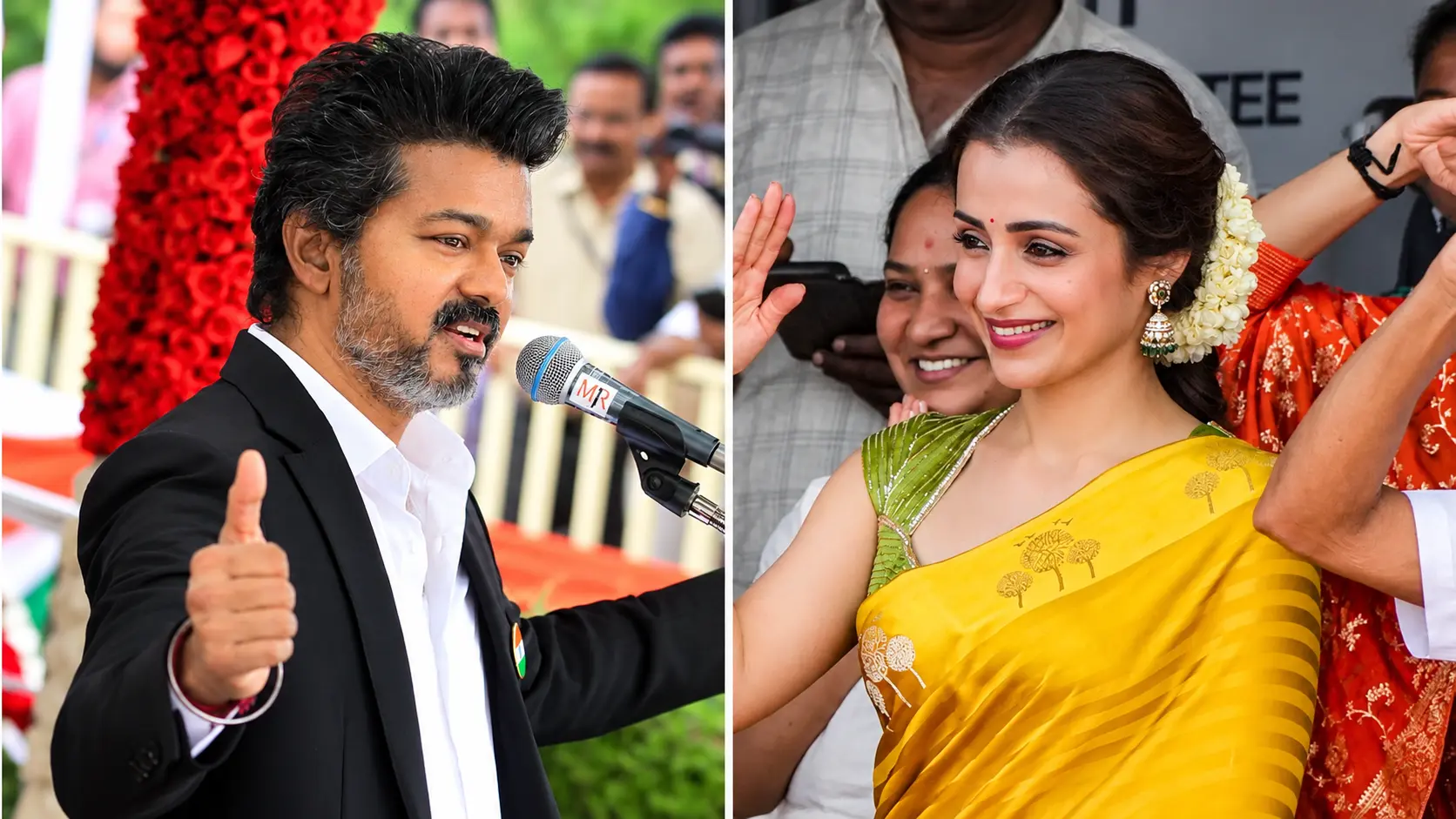
Tamil Nadu Chief Minister C. Joseph Vijay has spoken out against abusive and degrading language directed at women, delivering a strong message in the state Assembly amid an ongoing political controversy involving DMK leader Udhayanidhi Stalin and actor Trisha Krishnan. Vijay, who leads the Tamilaga Vettri Kazhagam (TVK) government, said political disagreements are a normal part of democratic life, but personal attacks and vulgar comments should not be allowed to become part of political discourse. His remarks come at a time when the Trisha controversy has intensified the political confrontation between the ruling TVK and the opposition DMK.
Vijay calls for restraint in political speech
Speaking in the Assembly, Vijay stressed that political leaders have every right to criticise their opponents. However, he drew a distinction between political criticism and comments that personally demean individuals. He particularly objected to language targeting women, including what he described as abusive, defamatory and double-meaning remarks. The Chief Minister's comments were not directed at any individual by name. However, they came against the backdrop of the recent controversy surrounding Udhayanidhi Stalin and remarks made during a public meeting in Thanjavur. Vijay said political competition should not result in the degradation of public debate. He also reminded legislators that people are closely watching the conduct and language of political leaders. The issue has therefore moved beyond a dispute involving two political parties and has become part of a wider discussion about the standards expected from public figures.
What happened in the Trisha controversy?
The controversy began during a protest in Thanjavur related to the Cauvery water dispute. Udhayanidhi Stalin was criticising the Vijay government when people in the gathering reportedly began chanting the name of actor Trisha Krishnan. Udhayanidhi then made a statement that was widely interpreted as having a double meaning involving the actor. The comment quickly spread across social media and triggered a political storm. The ruling TVK strongly criticised the remark, while the DMK defended its leader. Udhayanidhi later rejected the allegation that he had made an objectionable comment about Trisha. He maintained that his remarks were related to the Cauvery issue and said he had not made any inappropriate reference to the actor. India Today reported that Udhayanidhi reiterated this position after his arrest and questioning.
Udhayanidhi's arrest escalated the political battle
The controversy took a more serious turn when Tamil Nadu Police arrested Udhayanidhi from his Chennai residence in connection with the case. According to reports, the case followed a complaint alleging that his remarks were derogatory and offensive. He was taken to Thanjavur for questioning before being released on bail. The arrest further intensified the confrontation between the TVK government and the DMK. Udhayanidhi described the action as politically motivated and said he would fight the matter legally. The DMK, meanwhile, accused the ruling government of using the controversy to divert attention from the original Cauvery water dispute. The TVK rejected those allegations and maintained that action was being taken because of the alleged remarks rather than because Udhayanidhi had criticised the government.
Vijay invokes Jayalalithaa's Assembly episode
While discussing the issue of offensive political language, Vijay also referred to the treatment of former Tamil Nadu Chief Minister J. Jayalalithaa inside the Assembly in 1989. The incident remains one of the most controversial episodes in the history of Tamil Nadu politics. Jayalalithaa, then the Leader of the Opposition, faced a highly confrontational situation inside the Assembly during a clash involving members of the ruling and opposition sides. Vijay used the episode to underline the point that women in politics have historically faced humiliation and personal attacks. His reference added a historical dimension to the current controversy, connecting today's political arguments with one of Tamil Nadu's most remembered Assembly confrontations. The 1989 episode continues to feature prominently in political debates about the treatment of women in public life.
A larger debate over political culture
The latest controversy has once again raised questions about the boundaries of political speech. Tamil Nadu has traditionally witnessed fierce political competition, particularly between the major Dravidian parties. With Vijay's TVK now in power, the state's political landscape has entered a new phase, bringing a fresh confrontation between the ruling party and the DMK. The Trisha controversy has added a personal dimension to that rivalry. For Vijay, the issue appears to be about maintaining a certain standard of political discourse. His Assembly remarks suggest that criticism of governments and political leaders is acceptable, but comments targeting individuals, particularly women, in a degrading manner should not become normalised. The controversy also highlights the growing influence of social media. A statement made at a public gathering can now reach millions within minutes, turning a local political exchange into a statewide controversy.
Respect must remain at the centre of politics
The debate surrounding Vijay, Udhayanidhi Stalin and Trisha is unlikely to disappear quickly. The legal proceedings, political accusations and competing claims from the TVK and DMK have ensured that the issue remains in the public spotlight. But Vijay's central message was broader than the immediate controversy. Political disagreements are inevitable in a democracy. Governments will be criticised, opposition parties will challenge those in power, and leaders will continue to exchange sharp political attacks. However, there is a difference between strong political criticism and language that humiliates or demeans another person. By invoking Jayalalithaa's experience and speaking against personal attacks on women, Vijay has placed the current dispute within a much larger conversation about political responsibility. As Tamil Nadu's new political equation continues to develop, the controversy may ultimately become another test of whether competing parties can maintain political differences without allowing personal attacks and offensive language to dominate public life.