.webp)
Home / gujarat / Registration Alone Doesn't Make a Hindu Marriage Valid, Says Gujarat High Court
Registration Alone Doesn't Make a Hindu Marriage Valid, Says Gujarat High Court
By: My India Times
3 minutes read 8Updated At: 2026-07-01
Registration Alone Doesn't Make a Hindu Marriage Valid, Says Gujarat High Court
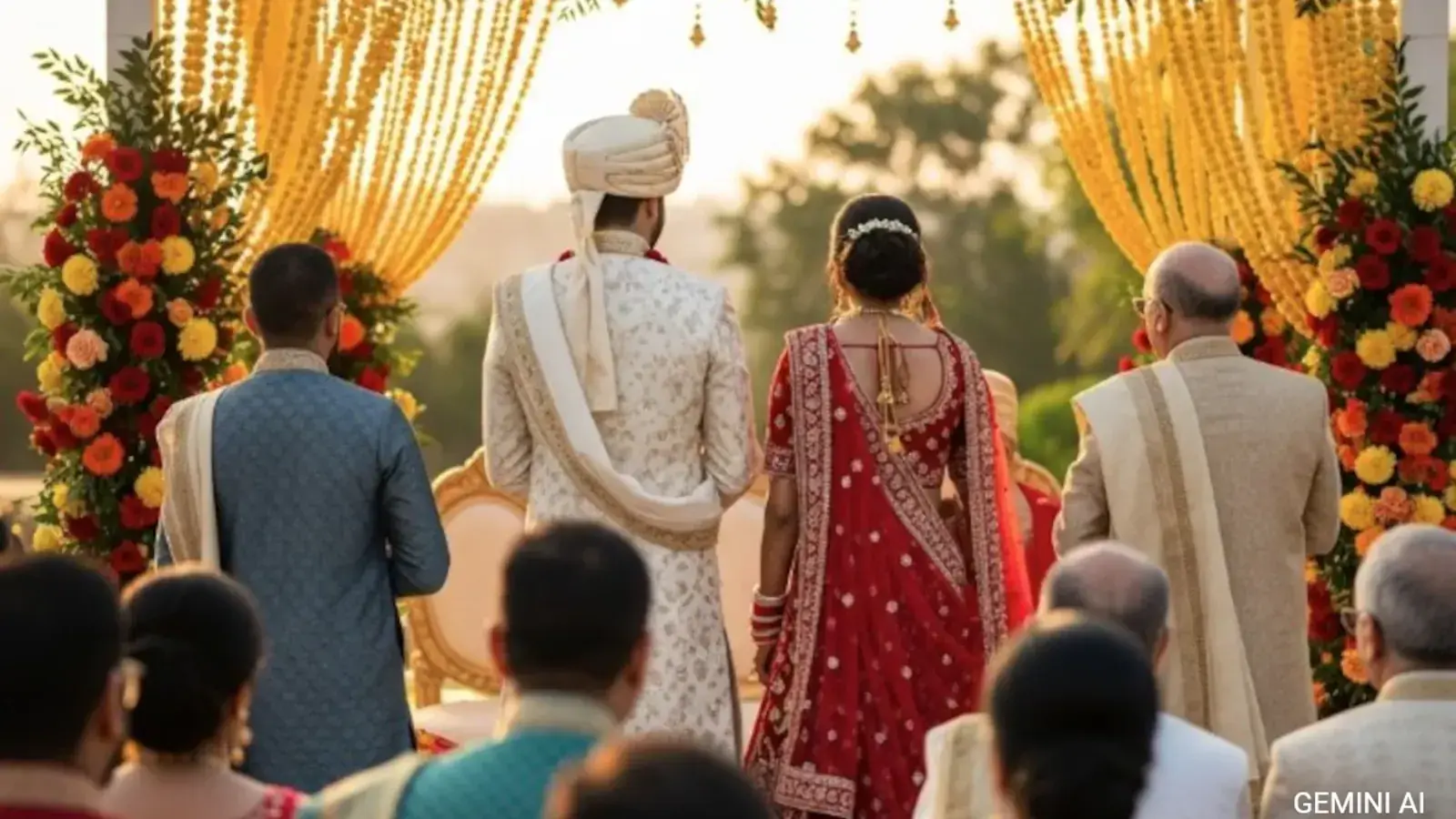
Ahmedabad: In a significant judgment that reinforces the legal and religious principles governing Hindu marriages in India, the Gujarat High Court has clarified that merely registering a marriage does not make it legally valid if the essential Hindu marriage ceremonies have not been performed. Because it emphasizes the significance of customary ceremonies under the Hindu Marriage Act, 1955, particularly in disputes over the validity of marriage, the case has garnered a lot of attention. The High Court observed that a Hindu marriage is much more than a legal formality or a social celebration. The court claims that it is a sacred institution that gains legal recognition through the execution of customary rites and ceremonies, such as the well-known Saptapadi ritual, in which the bride and groom walk around the holy fire seven times.
Court Sets Aside Family Court's Decision
The judgment was delivered by a division bench of Justices Ilesh Vora and R.T. Vachhani while hearing an appeal filed by a man residing in the United Kingdom. The appellant contested a previous family court ruling that declined to declare a purported marriage null and void. The man stated that he had never solemnised a marriage with the woman, had never performed any Hindu ceremonies with her, and had never lived with her as husband and wife. He further claimed that several documents that were utilized to get a marriage registration certificate had his signature collected fraudulently.During the proceedings, the woman reportedly admitted that no customary marriage ceremonies had taken place between them. The High Court determined that the necessary legal conditions for a lawful Hindu marriage were absent in light of this admission.
Why Registration Alone Is Not Enough
Section 7 of the Hindu Marriage Act, 1955, which stipulates that a Hindu marriage must be solemnized in accordance with the customary rituals and ceremonies observed by either party, was cited by the court. In various Hindu traditions, the marriage becomes final and legally binding when Saptapadi is completed.The judges emphasized that registration is only a record of a marriage that has already been legally solemnised. It cannot replace the mandatory ceremonies prescribed under Hindu law. If the essential rituals are absent, registration by itself cannot create a valid marital relationship.
Marriage Is a Sacred Institution
The Gujarat High Court characterized Hindu marriage as a "samskara," or sacred ceremony, as opposed to a straightforward contractual arrangement in its thorough observations. The court noted that marriage forms the foundation of family life and carries spiritual, emotional, social, and legal significance.The bench remarked that marriage should not be viewed merely as an occasion for lavish celebrations, entertainment, or commercial activities. Instead, it represents a lifelong commitment based on mutual respect, consent, equality, and responsibility.The judges also observed that Hindu traditions regard a wife as an equal partner in marriage while recognizing her independent identity. They stressed that the institution of marriage deserves respect and careful consideration before couples choose to enter into it.
Important Message for Couples
The court urged young men and women to understand the seriousness of marriage before taking the step. It observed that the institution has deep cultural and legal importance in Indian society and should not be reduced to a ceremonial event focused only on celebrations.According to the judgment, the prescribed rituals are believed to purify and spiritually unite the couple, making the marriage meaningful under both religious traditions and the law.
Why This Judgment Matters
Legal experts believe this decision will serve as an important precedent in cases involving disputed marriages, fraudulent registrations, and matrimonial litigation. The ruling makes it clear that while marriage registration is useful for legal documentation and proof, it cannot substitute the mandatory ceremonies required under Hindu personal law.The judgment also reinforces that courts will examine whether essential customs were actually performed before recognising the validity of a Hindu marriage. For couples, families, and legal practitioners, the ruling is a reminder that compliance with both statutory provisions and customary rituals remains necessary for a legally valid Hindu marriage.
....Independent reporting, fact-checked analysis and breaking news coverage from India and around the world.
Trusted source for breaking news, business, technology, world affairs, finance, economy, health, sports and market insights from India and around the globe.
Join our WhatsApp Channel

















































































.png)
 (1).png)