.webp)
Home / brand-stories / Zerodha’s Rainmatter Invests ₹56 Crore in Karo Sambhav to Boost India's Critical Mineral Recycling Ecosystem
Zerodha’s Rainmatter Invests ₹56 Crore in Karo Sambhav to Boost India's Critical Mineral Recycling Ecosystem
By: My India Times
4 minutes read 8Updated At: 2026-06-19
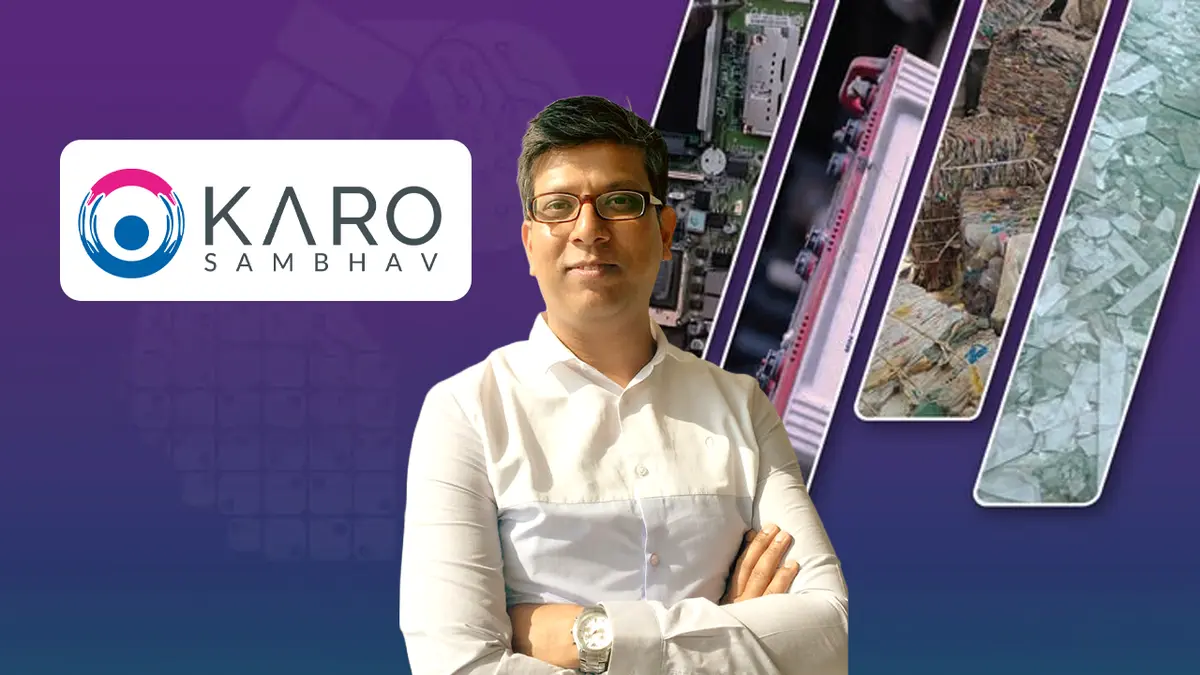
Funding to Strengthen E-Waste Recycling and Recover Valuable Raw Materials for India's Manufacturing Future
New Delhi, June 19, 2026: In a significant boost to India's circular economy and sustainable manufacturing ambitions, Rainmatter, the investment and sustainability initiative backed by Zerodha, has invested ₹56 crore in recycling startup Karo Sambhav.
The additional funding will enable the business to grow its recycling infrastructure and speed up the extraction of valuable materials and essential minerals from electronic waste and other abandoned goods. The investment coincides with India's growing emphasis on building domestic supply chains for sectors including electronics, electric vehicles, renewable energy, defense, healthcare, and advanced manufacturing while lowering reliance on imported key minerals.
Karo Sambhav Plans Major Expansion in Recycling Infrastructure
Karo Sambhav, which was founded in 2017 and has its headquarters in Gurugram, has established a significant foothold in the recycling and circular economy industries of India. The company specializes in collecting, tracking, and recycling end-of-life products, including electronic waste, batteries, glass, and other material streams.
Karo Sambhav intends to build cutting-edge facilities that can extract valuable materials from abandoned electronics and industrial garbage using the recently obtained funding. High-value commodities including copper, lithium, cobalt, nickel, gold, silver, graphite, rare earth elements, and other vital minerals that are necessary for contemporary manufacturing are the focus of the company's efforts to increase recovery rates. Additionally, the financing will improve traceability systems throughout the recycling value chain, boost processing capacity, and fortify collecting networks.
Why Critical Mineral Recovery Matters for India
As India positions itself as a global manufacturing hub, access to critical raw materials has become increasingly important. Minerals, which are frequently imported from other nations, are essential to the manufacturing of smartphones, electric cars, batteries, semiconductors, renewable energy equipment, and defense technologies.
Many of these valuable materials already exist inside discarded electronic devices, including smartphones, laptops, batteries, printed circuit boards, and industrial equipment. Recovering these resources through recycling can reduce import dependence, lower environmental impact, and create a more sustainable supply chain. Over the next ten years, experts predict that urban mining—the recovery of precious elements from waste products—may emerge as one of India's most significant resource prospects.
Nine Years of Building India's Circular Economy
Unlike many startups that depend heavily on early-stage funding, Karo Sambhav has spent nearly a decade growing its operations through a largely self-sustained business model. Over the years, the company has established recycling channels across more than 50 cities in India and has facilitated the responsible recycling of over 150,000 metric tonnes of waste. It currently operates specialized recycling facilities and uses technology-driven systems to ensure transparency, compliance, and traceability throughout the recycling process. The company's model focuses not only on waste collection but also on creating an ecosystem where materials can be recovered and reintroduced into manufacturing supply chains.
Rainmatter Backs Sustainable and Climate-Focused Innovation
Rainmatter, known for investing in businesses focused on sustainability, climate resilience, and environmental innovation, sees Karo Sambhav as a strategic player in India's resource security journey. According to Rainmatter, the investment aligns with its long-term vision of supporting companies that are building scalable solutions for environmental challenges while creating economic value. The partnership is expected to accelerate India's transition toward a circular economy where waste is treated as a valuable resource rather than a disposal problem.
India's E-Waste Challenge Continues to Grow
India is currently among the world's largest generators of electronic waste. With increasing smartphone adoption, rapid digitalization, and shorter device replacement cycles, the volume of discarded electronics continues to rise each year. Industry estimates suggest that India generates more than four million metric tonnes of e-waste annually. Globally, electronic waste generation is expected to reach record levels by the end of the decade.
This growing challenge also represents a major economic opportunity. Valuable metals and critical minerals locked inside obsolete electronics can be recovered and reused, reducing environmental damage caused by mining while supporting industrial growth.
Government Support for Critical Mineral Recycling
Karo Sambhav's expansion plans also align with the Government of India's broader strategy to strengthen domestic critical mineral supply chains. The company's proposed infrastructure has received eligibility status under the government's incentive framework designed to promote critical mineral recycling. The initiative forms part of the National Critical Minerals Mission, which aims to improve resource security and support India's long-term manufacturing goals.
As demand for electric vehicles, battery storage systems, clean energy technologies, and advanced electronics continues to rise, recycling is expected to play an increasingly important role in meeting future material requirements.
What This Means for India's Green Economy
The ₹56 crore investment represents more than just a funding round. It highlights growing investor confidence in India's recycling sector and underscores the importance of resource recovery in building a sustainable economy.
With stronger recycling infrastructure, advanced material recovery technologies, and increasing policy support, companies like Karo Sambhav could help transform India's waste management landscape while securing valuable resources for future industries. As the country moves toward greener manufacturing and self-reliant supply chains, critical mineral recycling is emerging as one of the most important sectors to watch.
Key Highlights
- Rainmatter by Zerodha invests ₹56 crore in Karo Sambhav.
- Funding will support critical mineral and e-waste recycling infrastructure.
- Karo Sambhav operates across more than 50 Indian cities.
- Over 150,000 metric tonnes of waste have been recycled through its network.
- Focus areas include lithium, cobalt, nickel, copper, gold, silver, graphite, and rare earth materials.
- Expansion supports India's manufacturing, EV, clean energy, and electronics sectors.
- Company receives support under India's critical mineral recycling initiatives.
Independent reporting, fact-checked analysis and breaking news coverage from India and around the world.
Trusted source for breaking news, business, technology, world affairs, finance, economy, health, sports and market insights from India and around the globe.
Join our WhatsApp Channel

















































































.png)
 (1).png)