.webp)
Home / technology / AI Data Centers Could Cause 1,300 Deaths Every Year in the US, Scientists Warn: Hidden Pollution Crisis Revealed
AI Data Centers Could Cause 1,300 Deaths Every Year in the US, Scientists Warn: Hidden Pollution Crisis Revealed
By: My India Times
3 minutes read 13Updated At: 2026-06-11
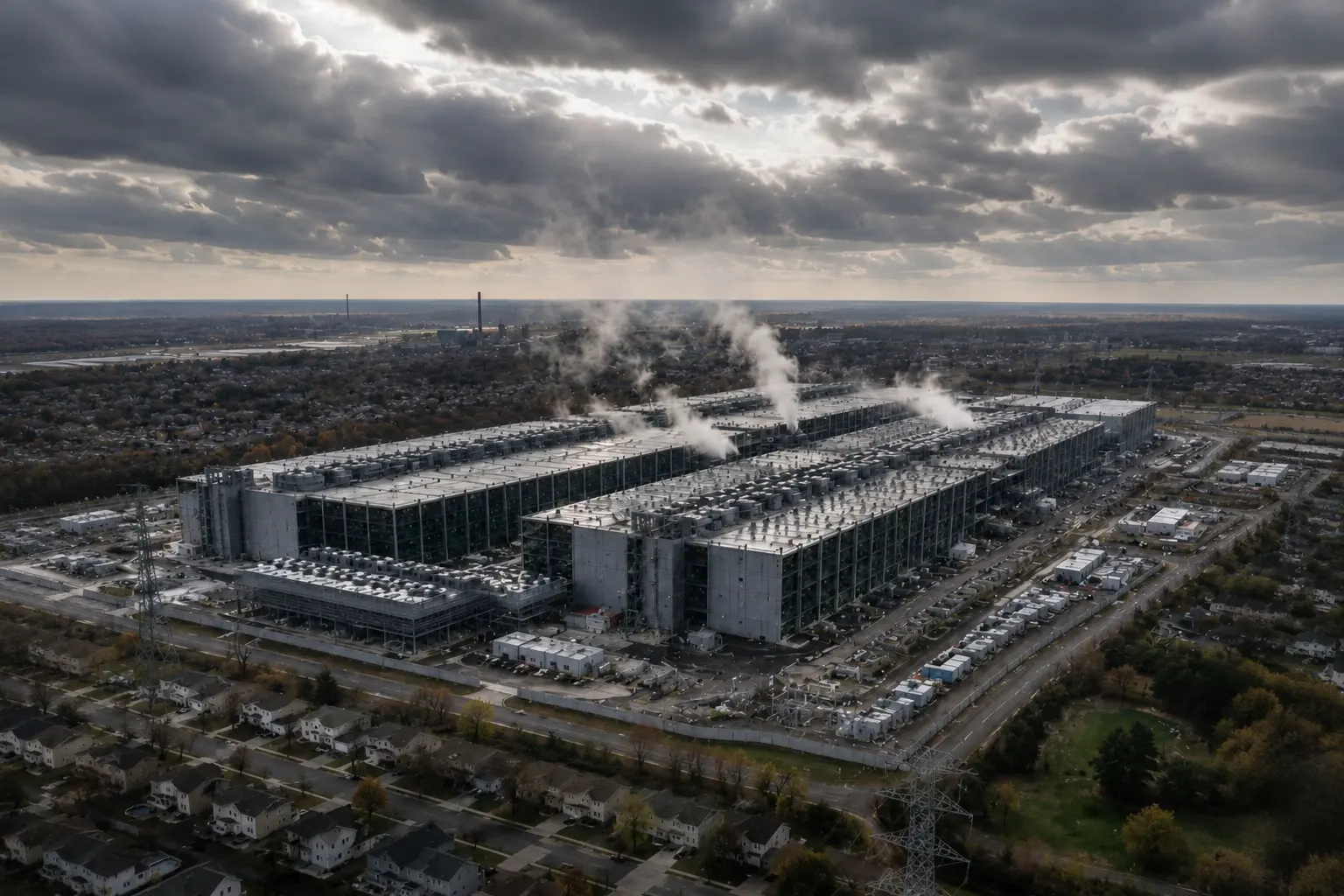
Although artificial intelligence is revolutionizing sectors at an astounding rate, a recent scientific alert raises the possibility that the technology's effects on the environment could be more detrimental than most people realize. Recent studies suggest that emissions from the expanding number of data centers in the US may be responsible for about 1,300 air pollution-related premature deaths annually.
Experts speculate that the infrastructure supporting AI tools, cloud computing, and digital services may also be posing an unanticipated public health risk as demand for these technologies continues to soar.
Why Are Data Centers Becoming a Health Concern?
Data centers are massive facilities packed with servers that operate around the clock to process and store enormous amounts of digital information. Running these facilities requires huge amounts of electricity, and in many regions that power still comes from fossil fuel-based energy sources. Scientists argue that when electricity generation relies heavily on coal or natural gas, harmful pollutants such as fine particulate matter and nitrogen oxides can enter the atmosphere. Long-term exposure to these pollutants has been linked to respiratory diseases, heart problems, and premature deaths. The growing demand that data centers place on power plants that produce electricity is more concerning than the data centers themselves directly emitting pollutants.
AI Boom Is Driving Unprecedented Energy Demand
The rapid expansion of artificial intelligence has dramatically increased computing requirements across the globe. Every AI model, search engine, cloud application, and machine learning platform depends on powerful servers operating continuously. Industry analysts predict that electricity consumption by AI-related infrastructure will continue rising sharply over the next decade. New data centers are being built across multiple states, with companies investing billions of dollars to support future demand. While these facilities enable technological innovation, experts warn that without cleaner energy sources, their environmental footprint could grow significantly.
Study Estimates Around 1,300 Annual Deaths
Scientists have highlighted findings showing that pollution produced indirectly through the production of energy for data centers may be responsible for about 1,300 premature deaths annually in the United States.
The estimate is based on models that analyze air quality, energy consumption patterns, and public health impacts. Researchers emphasize that the number represents projected health effects associated with pollution exposure rather than direct accidents or incidents occurring inside data centers. Experts also note that communities located near fossil fuel-powered electricity generation facilities may face a greater share of these risks.
Can Renewable Energy Reduce the Problem?
Many technology companies have already announced commitments to renewable energy, carbon neutrality, and sustainable operations. Solar farms, wind energy projects, battery storage systems, and nuclear power are increasingly being explored to power future data centers. Environmental experts believe that transitioning data centers to cleaner electricity sources could significantly reduce pollution-related health risks while allowing AI innovation to continue. Improving energy efficiency, upgrading cooling technologies, and investing in low-emission infrastructure are also considered key solutions.
Balancing Innovation With Responsibility
Artificial intelligence has the potential to revolutionize healthcare, education, business, and scientific research. However, the latest findings serve as a reminder that technological progress must be balanced with environmental responsibility. Governments, energy providers, and technology companies may need to work together to ensure that the growing digital economy does not create unintended consequences for public health. As AI adoption accelerates worldwide, the conversation is shifting beyond innovation alone to include sustainability, clean energy, and the long-term impact on society.
....By: My India Times
Updated At: 2026-06-11
Tags: technology News | My India Times News | Trending News | Travel News
Join our WhatsApp Channel






































.jpg)











































































































.png)
 (1).png)