Home / science / NASA's James Webb Space Telescope Captures a Festive Galaxy: Insights into Universe's Formation
NASA's James Webb Space Telescope Captures a Festive Galaxy: Insights into Universe's Formation
By: My India Times
4 minutes read 102Updated At: 2024-12-24
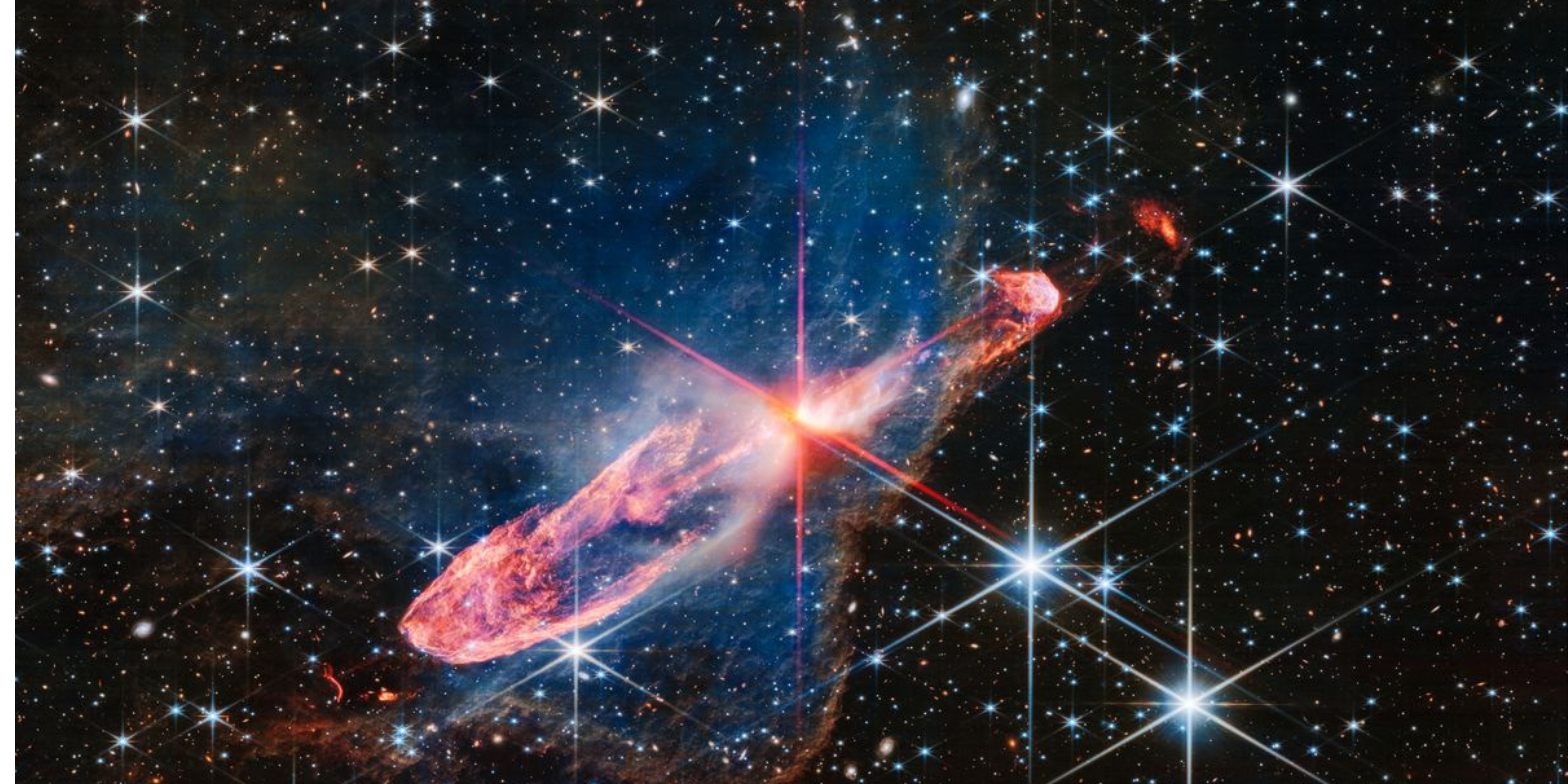
NASA’s James Webb Space Telescope (JWST) has achieved a remarkable milestone by capturing an image of a galaxy that reflects what the Milky Way might have looked like during its formation. This cosmic marvel, named "Firefly Sparkle," has been observed as it existed 600 million years after the Big Bang, offering scientists an unprecedented view of the Universe’s early days.
A Cosmic Christmas Display
The image is a dazzling spectacle, showcasing ten clusters of stars glowing in different colors, akin to sparkling baubles on a Christmas tree. This vibrant array has sparked excitement among astronomers, not only for its visual appeal but also for its scientific significance.
“I just love the sparkle galaxy with its Christmas lights shining as it was when the Universe was just 600 million years old,” said Professor Catherine Heymans, Scotland’s Astronomer Royal. “This discovery is gorgeous, scientifically important, and extremely festive.”
The multicolored appearance of the star clusters is attributed to their various stages of formation. Each hue tells a story of cosmic evolution, revealing the energetic processes that dominated the early Universe.
Witnessing Galaxy Formation in Real Time
For the first time, scientists have observed the assembly of a galaxy similar to our Milky Way. These findings shed light on how galaxies, including our own, took shape in the chaotic and dynamic early Universe.
“The data of what happened at this stage of the Universe is very sparse,” explained Dr. Lamiya Mowla of Wellesley College, Massachusetts, who co-led the research. “But here, we are actually watching a galaxy as it is being formed brick by brick. The galaxies we normally see around us are already formed, so this is the first time we have seen this process.”
The ability to study these formative stages in such detail marks a significant advancement in our understanding of cosmic history. While JWST has previously revealed older and more distant galaxies, none have provided such a clear view of the Milky Way’s potential origins.
A Technological Triumph
The James Webb Space Telescope, humanity’s most advanced observatory, operates from its vantage point in space, free from the interference of Earth’s atmosphere. This unique position enables it to capture extraordinary details of distant cosmic phenomena. With its powerful infrared capabilities, the JWST is rewriting the narrative of how we perceive the Universe.
Prof Heymans marveled at the technological feat, stating, “It’s amazing that humans have built a telescope capable of peering so far back in time to reveal these very nascent phases of galaxies in such a beautifully festive way.”
The telescope’s observations are not merely aesthetic but provide invaluable data about the Universe’s formative years. Each cluster of stars in the Firefly Sparkle galaxy represents a building block of a larger structure, pieced together over millions of years.
Decoding the Firefly Sparkle Galaxy
The Firefly Sparkle galaxy’s star clusters, glowing in a variety of colors, serve as a timeline of stellar evolution. These hues reflect different chemical compositions, ages, and energy levels within the clusters, painting a vivid picture of galactic formation.
Dr. Mowla highlighted the dynamic nature of this early galaxy. “It is so beautiful because the early life of a galaxy is extremely active. The clumps of stars are merging and forming larger structures, and this activity gives us a window into the birth of galaxies like our own.”
By studying this galaxy, scientists hope to unlock secrets about how stars and galaxies coalesced to form the vast cosmic network we observe today. The Firefly Sparkle provides a rare glimpse into a pivotal chapter of the Universe’s history, one that has remained elusive until now.
A Gateway to the Past
The JWST’s ability to look back in time has been likened to peering through a cosmic time machine. Every photon of light captured by the telescope represents a journey of billions of years, carrying with it information from an era long gone. With each discovery, the telescope brings us closer to understanding the Universe’s origins.
As scientists delve deeper into the data, the Firefly Sparkle galaxy promises to reveal more about the intricate processes that shaped the cosmos. Its festive appearance serves as a reminder of the beauty and complexity inherent in the Universe.
A Festive Discovery with Lasting Impact
The Firefly Sparkle galaxy’s discovery is more than a scientific triumph; it’s an inspiration. The image, reminiscent of holiday lights, has captured the imagination of people worldwide, bridging the gap between complex astronomy and the wonder of stargazing.
Prof Heymans summed up the sentiment, saying, “This discovery combines the festive spirit of the holidays with the awe-inspiring science of the cosmos. It’s a reminder of what humanity can achieve when we look to the stars.”
As the JWST continues its mission, the Firefly Sparkle galaxy stands as a shining example of the telescope’s potential to transform our understanding of the Universe, one twinkling discovery at a time.
....
By: My India Times
Updated At: 2024-12-24
Tags: science News | My India Times News | Trending News | Travel News
Join our WhatsApp Channel









































































































.png)
 (1).png)